9/18/11

Why do you write in English?

That is an very easy question to answer, half of my readers on this blog are from outside Sweden and as I am a very humble guy and most Swedes know English I think that this would be easier for everybody to understand and if you don’t please do not hesitate to write me and I will translate It for you, this will at the same time be a big challenge for me to do considering that English absolutely not are in any way my native language.

There will be some in just Swedish and sometimes in Serbian just for fun and I will improve over time so please have patience with me.

 In Vino Veritas

9/16/11

Mouton Rothschild the magic Chateau

This famous chateau is located in the village of Pauillac in the Médoc, 50 km north-west of the city of Bordeaux, France, Mouton Rothschild is one of the First Great Growths of Bordeaux Grand Crus, alongside Château Latour, Château Haut Brion, Château Margaux and Château Lafite-Rothschild.

The Bordeaux Classification of 1855 came about when wine brokers were tasked by Emperor Napoleon to create a classification of the wines of Bordeaux. The rating was based (mostly) on the price that the wines were bringing in the market and it divided these top wineries into five classifications. These classifications are known as 'Growths'.

Mouton was the first of the grand wines who started to do all the bottling at the chateau to assure quality of the wine.

 Historically, however, Château Mouton Rothschild was excluded from First Great Growth status. This, it was thought to be so because the vineyard had recently been purchased by an Englishman and was no longer in French ownership.

 In 1973, after decades of intense lobbying by its powerful and influential owner, Mouton Rothschild was elevated to "first growth" status - this was one of the two changes in the original 1855 classification (in 1856 Château Cantemerle was added to the Grand Cru list). This prompted a change of the Château Mouton motto: previously, the motto of the wine was Premier ne puis, second ne daigne, Mouton suis. ("First, I cannot be. Second, I do not condescend to be. Mouton, I am."). Today the motto is Premier je suis, Second je fus, Mouton ne change. ("First, I am. Second, I used to be. Mouton, I do not change.")

Mouton Rothschild's 203 acres of vineyards produce Cabernet Sauvignon (77%), Merlot (11%), Cabernet Franc (10%) and Petit Verdot (2%) that is used in the blend. The wine is fermented in oak vats (one of the few châteaux in the Médoc that is loyal to this traditional method) and then matured in new oak casks.

Baron Philippe de Rothschild, father of the current owner, Baroness Philippine de Rothschild, came up with the idea of having each year's label designed by a famous artist of the day. Since 1946, many of the world's great painters and sculptors have created works (displayed at the chateau) that are also reproduced on the labels of the wine.

On my first Mouton from the vintage of 1976 the label was painted by Pierre Soulages and was a gift from a friend on my 20:th birthday and that changed my direction in to wine and made me be more focused on wine and food pairing, I was an chef at that time and very nerdy in to food without knowledge of wine, what a great start it was, many thanks my dear friend Lars Bogren for introducing me to the world of wine.


Mosel Rieslings with a twist

I was in Mosel last week with Christina, granny Jorunn and Bianca to see how the new vintage is doing and on site there I tried to explain some about the German wines and quickly realized that this is not an very easy topic, but my friend Glenn is putting it down like this when he tries to explain just how sweet is sweet? The Germans have simplified this process by including the information on the label of each wine bottle.

Let's start with Kabinett: The lightest end of the German wine spectrum. They are the least sweet of the German Rieslings. This wine is great as an aperitif.

Spätlese is next in line for the sweet category. Breaking up the word spat means "late" and "lese" means "harvest". Put them together it means "late harvest". These grapes are fully ripened, a little sweeter than Kabinett and typically are more expensive.

Auslese wine is made from selected bunches of grapes which have been left on the vine and allowed to become overripe. Some of the grapes have been attacked by Edelfäule (botrytis cinerea an noble rot, a good mold which forms on the grapes as they shrivel up to become raisin-like, extracting the water, but leaving a honey flavor in the grape).

Beernauslese wines are specially selected grapes which have been affected by Edelfäule, choosing the ripest bunches. It is made only in outstanding years and is very expensive.

Eiswein is exactly what it suggests. The wine is made from overripe grapes unaffected by Edelfäule, but left on the vine until caught by frost. The grapes are pressed to separate the frozen water from the very sweet juice. Eiswein can be enjoyed with just about any sweet dessert or it can be the final course.

Trockenbeernauslese sometimes known as TBA is a wine that may be hard to pronounce but is unforgettable once it reaches your palate. The wine is usually ultra-rich and deep golden-orange. The term literally means dried up selected grapes. It is only made in selected years and is affected by Edelfäule. The selection is hand picked from a single vineyard.

German Rieslings display a mineral quality with pear, yellow/green apple, white peach, floral and honey notes. They are typically higher in acidity lower in alcohol which makes them a good match for spicy dishes. It can also be grown in Alsace, Austria, Australia, New Zealand, U.S.A., Chile, and South Africa.

Look for the label that has the famous German Eagle with the grape cluster. This represents the Verband Deutscher Pradikatsweingüter Association also known as the VDP. It is the oldest recognized wine organization in the world founded in 1910. This association insures quality in the wine by meeting certain members' uncompromising dedicated standards starting with self-imposed regulations.
In Bernkastel we stayed in the Riesling house, a small hotel upstairs and a great wine shop on the bottom floor with the best selection on Mosel wines and always a selection of older vintages for a great bargain, I just love old Rieslings and I will get back with the harvest report in  the next weeks.


9/15/11

Årets Glögg 2011


Tyskarna dricker glühwein, fransmännen har sitt vin chaud och engelsmännen värmer sig med mulled wine. Här i Sverige dricker vi glögg.

Blossa glögg görs på ett mer än hundra år gammalt recept från vinhandlaren J.D. Grönstedt i Gamla stan i Stockholm. Det har inte förändrats sedan Vin & Sprit startade tillverkningen år 1917.

Men som alla andra familjer har även släkten Blossa växt med åren. Med rötterna i traditionen har släktträdet fått nya grenar, utvecklats och föryngrats. Blossa för traditionen framåt med nutida design och spännande nya smaker. Blossas röda och vita lättglögg finns numera i närmsta livsmedelsaffär, medan samlare och entusiaster köar utanför Systembolaget inför premiären på Blossas läckert paketerade årgångsglögg.

All glögg i Blossa-familjen utgår från samma grundrecept. Smaken kommer från den unika kryddblandningen, som bland annat innehåller kardemumma, ingefära och nejlika. De färska kryddorna kommer från utvalda odlare på så vitt skilda platser som Kina och Guatemala, och får dra i sprit i sex månader på fabriken i Åhus.

Den viktigaste ingrediensen vid sidan av kryddextraktet är starkvinet. Blossa innehåller upp till tre olika sorters starkvin av sherry-typ, som tillverkas speciellt för Blossa i Spanien. De tar fem år att framställa och har en inbjudande karaktär av torkad frukt och russin.


BLOSSA 2011: Det är bara åtta år sedan den första årgångsglöggen presenterades, men den har redan blivit en kär familjemed­lem. Blossas årgångsglögg är både trendig och traditionell, den tillfredsställer vårt behov av förändring samtidigt som den bottnar i hundraåriga sedvänjor. Årgångsglöggen får sin smak av traditionella ingredienser med julkänsla. Tidigare år har den bland annat smaksatts med clementin, blåbär och saffran.

Årets upplaga av BLOSSA 2011 har fått smak av kaffe, odlat i Finca Las Delicias i El Salvador. Servera den rumstempererad med en isbit eller värm den på traditionellt vis (89 kr/750ml).


Harvest report from Champagne

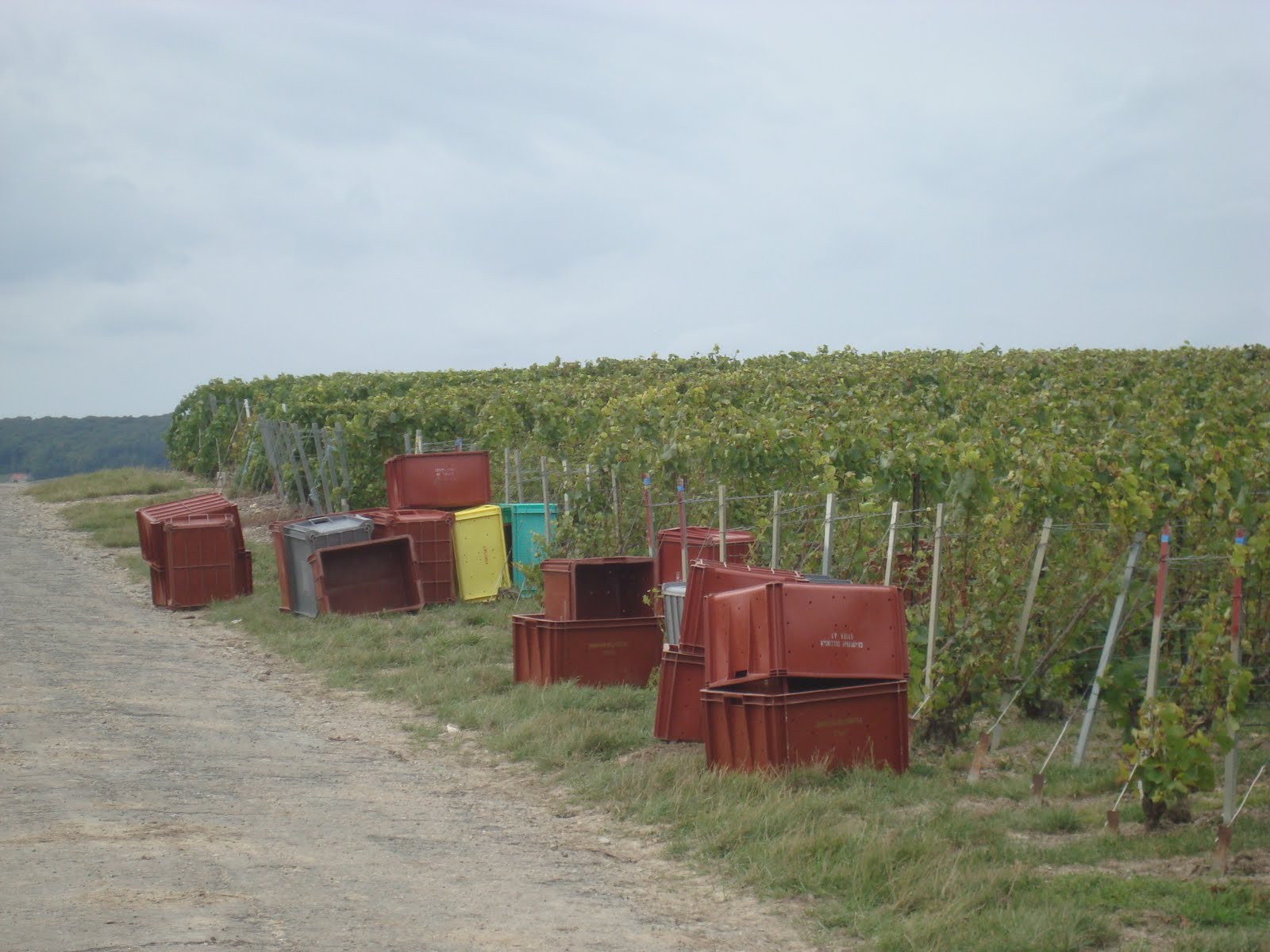
The last day of picking in 2011 was Wednesday the 7th September. A date which is usually matching the preparation of the harvest in Champagne rather than the end. But an early summer-like spring has given more than two weeks advance to the vines. This is not the earliest harvest we have had in recent years, 2003 with it's summer heat wave and the 11th April frost that destroyed almost all the yield had seen the harvest start on August the 23rd. Luckily this is also the only common point of those two years.


This year we have seen grapes of exceptional quality: healthy, ripe, giving sharp and fresh juices. Our chardonnays, from both Chouilly and Vitry were already at this stage a pleasure to taste. Now that fermentations are complete, our hope is confirmed, as in 1961, 2011 will contradict the common belief that "years in one" don't make good wines. We could have thought of no better gift for our 20 years anniversary. Similar in many ways to beautiful vintage years (1995 for its structure and to 2004 for its elegance) 2011 will continue to keep us in suspense until the final decision to make a vintage or not. We will be very cautious when taking that decision, even if 2011 is a meaningful year for us but we want to leave no doubt about the reasons for making it a Vintage.

Jérôme Legras
Champagne LEGRAS & HAAS


9/14/11

LEGRAS & HAAS CHAMPAGNE EXTRA

The champagne house of Legras & Haas maybe is unknown for some, but let me tell that you are missing out on some great wines made by this family.

Brigitte Hass & Francois Legras started up their own company in 1991 after being growers to other houses for many years.

I meet one of three sons, Jerome Legras and his mother on a sunny afternoon at the winery in Grand Cru Chouilly (he hade just finished the last pressing) to try some of the wines that they produce, what a great tasting hi gave me,
From the tradition bottling of 50% chardonnay, 25% pinot noir and 25% pinot meunier that is representing the house in full scale and great quality to the

Millesime 2005 made of 100% chardonnay grand cru selection parcellaire, what a great wine it was.

The house produce some 80 000 bottler per year from 14 hectare in Chouilly and a very small parcel of pinot in Ay and the vilification is obtained by the best and most rigour ways to obtain the highest quality.

Per Exigence


9/11/11

Bollinger Per Se

To visit Bollinger is a mission by it self, after months of work I was able to get a visitation time to this Grand Marque in champagne.

The Bollinger style is one of my favourite for many years and is was a special treat to get a chance to visit them as VIP extravaganza, both me and Christina was amazed on how much manual labouring was behind all of the cuvees and what efford they put in at every single bottle.

What I like about Bollinger is the power in the wines, I would say that they make a great white Burgundy with the finest and tiniest bubbles, its powerful, masculine, elegant and extremely complex wines always ready to consume, witch I like J

The barrel storage is one of a kind in champagne and the 3000+ barrels where all with a barcode so that the winemaker could read the whole history of the barrel with a scanner, some high Tec in a traditional place.

The latest baby is the rose wines that Bollinger was the latest to adopt due to that Lilly Bollinger did not like the idea of a rose wine, but market demands make them think twice about this and for the last two years there is two bottling of rosé
The special cuvee and the La Grand Annee rose.

The most mystifying in the range is the bottles of Vieilles Vignes Francaises! Made of ungrafted vines that was not affected of the phylloxera with two tiny grand cru plots of 100% pinot noir just outside the house and only about 2000 bottles a year, mystical, magical and probably fantastic, I did not taste it unfortunately, the bottles are all allocated to the best customers around the globe and if you can find it buy it. The price is an average of 900 €

The range goes from special cuvee, La Grande Annee, the R.D (recently disgorged) and then the masterpiece V.V.F, the best thing is that Bollinger put focus on a smaller portfolio and make the best of what the grapes can provide.

 Bollinger is the trademark for gutsy champagne and I just love it.


Gibanica or cheese pie from Balkan

Gibanica is one of the most recognizable pastry dishes from the Balkans, whether served on festive occasions or as a comforting family snack...